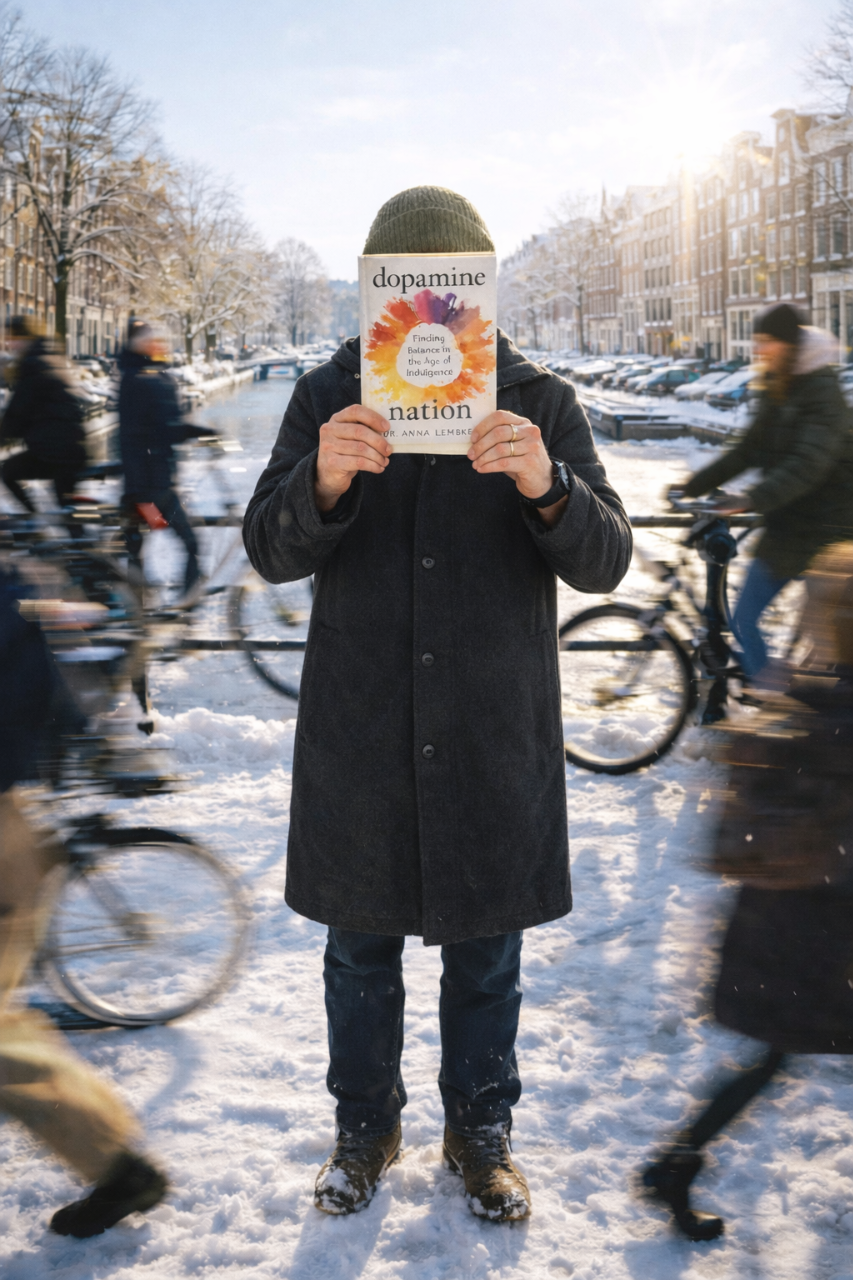
Dopamine Nation — When “More” Stops Working
That’s not the book I got.
This is a book about addiction. Explicitly so. Patients, substances, compulsions, relapses. At first, that felt like a mismatch. But halfway through, it became clear: that mismatch is the point.
What Anna Lembke is really describing isn’t addiction as a clinical outlier. She’s describing modern life as an addiction-shaped environment.
Why “more” used to be a feature, not a bug
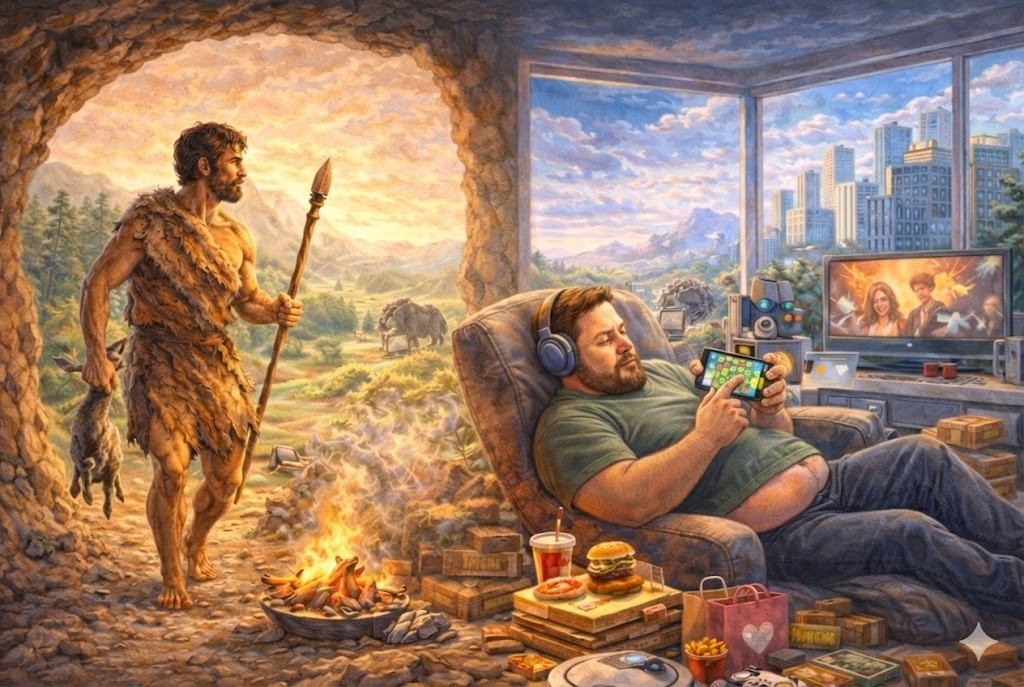
From an evolutionary perspective, our brains make perfect sense.
For most of human history:
-
calories were scarce
-
stimulation was rare
-
novelty meant opportunity
-
comfort was temporary
In that world, wanting more kept you alive.
Craving pushed you to explore.
Pleasure reinforced useful behaviour.
Discomfort signalled danger, or growth.
The dopamine system evolved to solve scarcity.
The problem, as Dopamine Nation makes clear, is that the same system collapses under permanent abundance.
When food, stimulation, validation, entertainment, and relief are always available, fast, cheap, and potent, the ancient signal (“this matters, pursue it”) no longer maps to reality. Wanting detaches from meaning. Wanting outpaces liking.
In a world of plenty, more stops being adaptive and starts being corrosive.
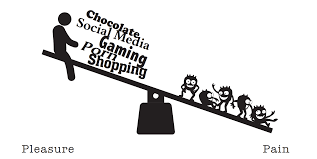
"The relentless pursuit of pleasure and avoidance of pain leads to pain." - Anna Lembke, Dopamine Nation.
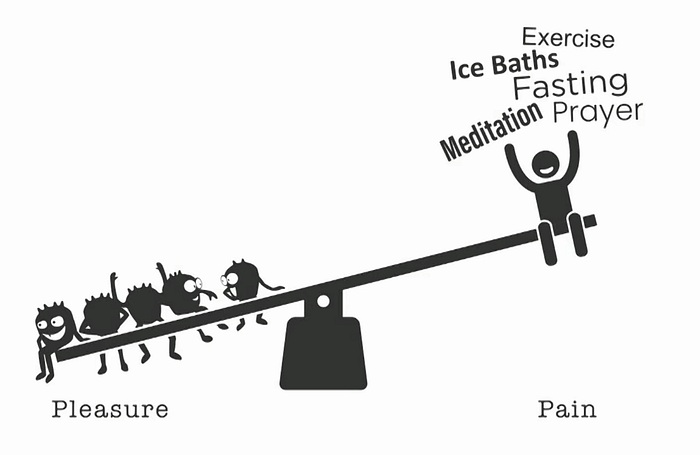
The real substance: “more”
Lembke’s pleasure–pain balance is brutally simple. Pleasure and pain sit on the same neurological seesaw. Push pleasure too often, and the brain compensates with pain. What once felt good eventually just restores baseline.
You don’t need heroin, gambling, or alcohol for this to apply.
You just need:
-
speed
-
variety
-
novelty
-
frictionless access
More content.
More productivity.
More optimisation.
More relief.
In that sense, “more” is the most widely consumed drug of our time; socially rewarded, endlessly rationalised, and almost never named.
Rationalising and hiding: The quiet centre of it all
The patients in the book may look extreme. But the mechanisms are deeply familiar.
What resonated most for me wasn’t loss of control. It was rationalising and hiding.
Not dramatic denial — but the small, everyday distortions:
-
“This isn’t really a problem.”
-
“I’ve earned this.”
-
“At least it’s not as bad as X.”
-
“I’ll deal with it later.”
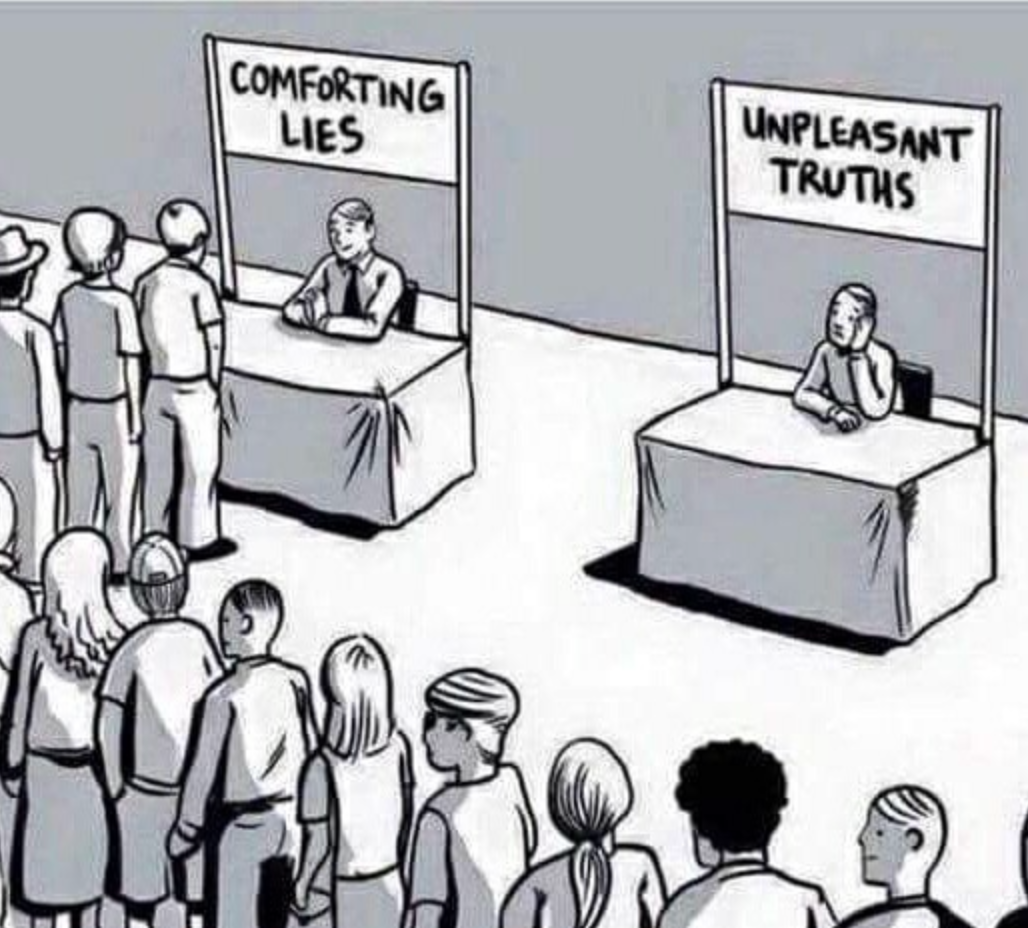
And then the hiding — mostly from ourselves. Minimising, reframing, keeping certain behaviours just vague enough to avoid scrutiny. Not because they ruin our lives, but because they’re slightly uncomfortable to see clearly.
What The Comfort Crisis (linkt to my thoughts below) helped me see, and what fits perfectly here, is that the brain lies constantly, and confidently.
It tells you you’re hungry when your body is perfectly fine.
It signals urgency when there is none.
It frames discomfort as danger, even when it’s just absence of stimulation.
In a world of abundance, these false alarms become persuasive. When we take them at face value, rationalising becomes effortless and hiding feels justified.
Lembke’s point lands quietly but firmly: addiction thrives less on excess than on believing the brain’s first story, especially when that story promises relief.
Truth as a technology for modern humans
One of the book’s most interesting ideas, and one that runs through nearly every case study, is that truth-telling changes the brain.
Not confession as performance. Not self-flagellation. But accurate storytelling:
-
what actually happened
-
what I wanted
-
what I felt afterward
-
what story I told myself
Again and again, recovery begins when people stop outsourcing responsibility and start narrating reality without distortion; and without cruelty.
That balance matters.
Responsibility without compassion collapses into shame.
Compassion without responsibility collapses into rationalisation.
A small experiment: Friction in a frictionless world
Rather than grand abstinence, Dopamine Nation repeatedly points to something quieter: self-binding. Creating constraints in advance, while the reflective mind is still in charge.
I tried a modest version.
For one week:
-
I removed one low-level, high-frequency behaviour I tend to rationalise.
-
I didn’t replace it or optimise the experiment.
-
I simply noticed the urge, and wrote down the story my brain produced in response.
What surprised me wasn’t the craving.
It was how fast the justifications appeared, and how emotionally convincing they were.
Seeing those narratives clearly, without immediately obeying them, turned out to be the real intervention. Not discipline. Not purity. Just visibility.
A larger arc: From nature to comfort to anxiety to craving
Seen in context, Dopamine Nation completes a longer line of thought for me.
-
The River Is Alive re-sensitise to attunement, to environments that shape behaviour without constant stimulation. (my thoughts)
-
The Comfort Crisis shows how the systematic removal of discomfort weakens us. (my thoughts)
-
The Anxious Generation maps the consequences of overstimulation and underdevelopment, especially for children. (my thoughts)
-
Dopamine Nation explains the underlying engine: a brain evolved for scarcity now drowning in abundance, quietly recalibrating itself toward dissatisfaction.
Together, they point to the same conclusion from different angles:
The problem isn’t pleasure.
It’s unexamined pleasure in an environment that never says “enough.”
Final thoughts
Dopamine Nation isn’t a book about eliminating joy. It’s a book about reclaiming agency in a world engineered for craving.
Its most unsettling insight is also its most humane one:
The line between “addicted” and “functional” is thinner than we like to admit, and mostly maintained by stories we haven’t examined closely enough.
Not moral failure.
Not weakness.
Just ancient wiring, running in a very new world.