Is the River Alive?
Some books ask questions. Is the River Alive? becomes the question. Robert Macfarlane’s latest work is an expedition into the depths — not only of rivers, but of the human heart and imagination. In three distinct journeys — Ecuador’s cloud forests, India’s beleaguered Chennai delta, and the ancestral waters of Nitassinan in Canada — Macfarlane explores how rivers are understood, treated, neglected, celebrated, and at times, worshipped. The result is an urgent, immersive, multi-layered meditation on water as subject rather than resource.
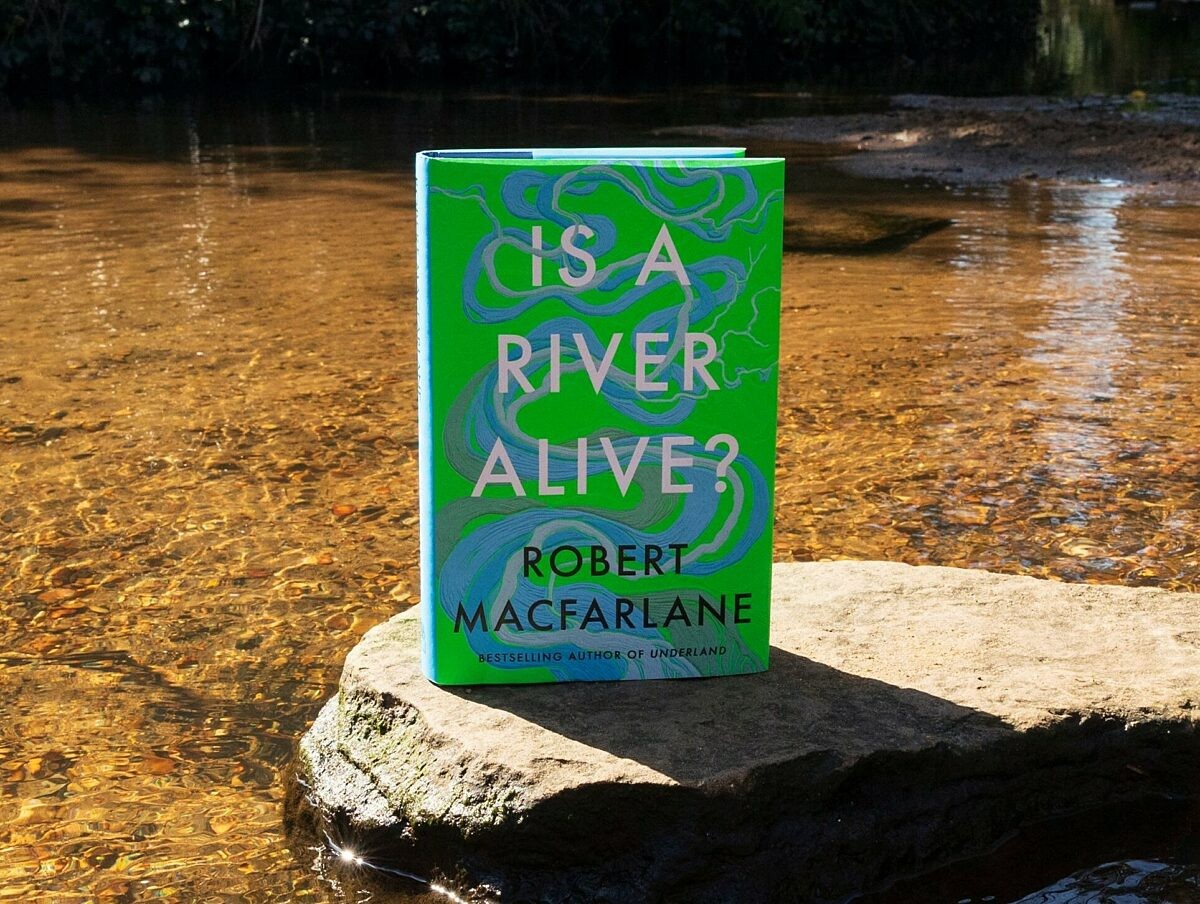
On Reading with Curiosity and Longing
I came to this book with deep admiration for Macfarlane’s earlier work. Underland (below a picture of me reading the book actually in a river hahah) is a profound exploration of the world beneath our feet: burial chambers, nuclear waste sites, glacial caves, catacombs, underground rivers, and forgotten bunkers.
Among these layers, fungi play a symbolic and scientific role — especially in the chapter exploring the mycorrhizal networks that link forests together beneath the soil. These hidden threads become metaphors for kinship, communication, and survival across species, extending Macfarlane's argument that what lies beneath us is not just dark — it's alive.
Macfarlane weaves together themes of deep time, human memory, myth, mourning, and ecological legacy. He descends into the Earth both physically and philosophically, asking what we choose to hide, preserve, or warn the future about. From the ice cores of Greenland to the catacombs of Paris, Underland reflects on what it means to live with awareness of what lies below and beyond us.
Is the River Alive? returns to many of these motifs but with a new axis: water, flow, and the entanglement of life across surface and stream.
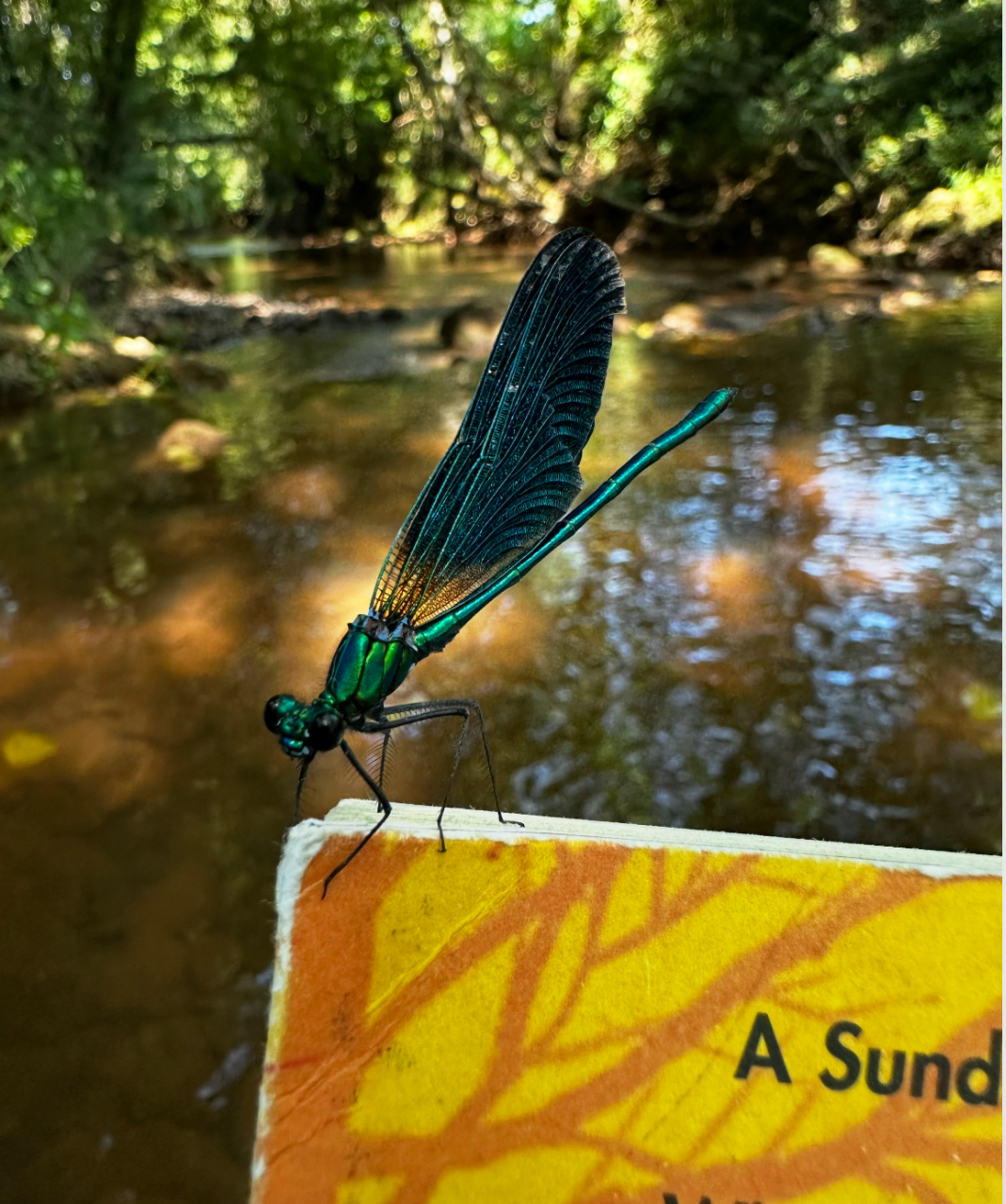
Reading Underland in the Le Créneau stream, Nauviale, France, Summer 2023
A Fellowship of Witnesses
This book is alive with many voices. It’s not a solo expedition or an elite circle—it’s a chorus. From Giuliana Furci's poetic mycology in Ecuador to Yuvan Aves in Chennai guiding rites for both rivers and grief, to Innu elders in Canada sharing the Mutehekau Shipu's spirit, Macfarlane doesn’t center himself—he listens.
Giuliana’s wonder is contagious:
“What we have here this evening is nothing!... You can see all the veins of the forest lit up.”
And later, crawling under a decaying tree trunk:
“It’s a fungal city! … When the tree falls is when the glory begins.”
Cosmo Sheldrake — brother of Merlin Sheldrake, whose work Entangled Life (another book I love) was featured in Underland — joins in, not as a celebrity cameo but as another seeker, capturing natural soundscapes for music inspired by rivers. His work becomes another layer of the river’s voice, a resonance beyond the page.
They are only part of a much wider web — activists, elders, scientists, poets, and locals — forming a temporary ecology of attention. The river, Macfarlane reminds us, is not a singular narrative. It is a confluence.
This is what makes the book personal for me. I find in it echoes of other work I care about—from mycelial networks to storytelling as resistance, from collaborative inquiry to ecological rights. That wide-ranging kinship feels like a movement: curious, creative, non-hierarchical, and grounded in wonder.
Activism Through Narrative and Art
This is where Macfarlane’s book intersects with my other passions. It treats ecological engagement not just as observation, but as stewardship through storytelling. And this connects directly with the work of TINKEBELL. (follow her on Instagram), whose recent projects expose corporate pollution through art that is as unsettling as it is beautiful.
Her work, like Macfarlane’s, re-subjectifies the world.
Flora Tata Metallica — Dust as Witness
In Flora Tata Metallica (2021–22), TINKEBELL. spent a year in the dunes near Tata Steel, collecting black magnetized dust from pollution and using it to create prints of the local flora. These canvases—formed from toxic particles—capture the paradox of beauty and harm. The artist herself suffered physical effects from the process: nosebleeds, dizziness, chronic exposure.
The result? A haunting series of negative prints that transform dust into evidence, art into indictment.
Arena Candidus Solvay — White Beaches, Grey Realities
This piece draws from the Solvay chemical plant in Italy, whose waste has bleached beaches near Rosignano. Visitors snap Instagrammable shots on these "Caribbean" shores, unaware of the toxic reality beneath. TINKEBELL. collected this altered sand and, again, used it to create ghostly plant prints.
Like Macfarlane, she challenges the aesthetics of denial—the way we romanticize what should revolt.
Oleum Shell Isla de Curaçao — Mangroves and Memory
On Curaçao, she traced the toxic legacy of Shell. Where mangrove forests once flourished, only polluted sludge remains. She used this very material to paint the lost landscape, transforming waste into elegy. The medium is the message.
The River’s Grammar of Life
Macfarlane closes with a line I can't stop thinking about:
“...its grammar of animacy is one of ands and throughs and nows... eddying in counterflow to cause spirals and gyres that draw breath into water, life into the mind..."
You can’t take in a river all at once. It defies focus. Try to look at the whole, and you lose the motion. Try to fix your gaze on the background, and you miss the currents. But follow a single leaf drifting downstream, and suddenly the river reveals its dimensions—eddies, spirals, crosscurrents—until you feel almost dizzy with awareness.
That’s life.
That’s parenting.
That’s building a company.
That’s creating something meaningful—together—with someone else, in a world that never stays still.
You’re rarely moving in perfect sync. But sometimes—miraculously—your currents converge. And in those moments of shared momentum, you glide forward. Maybe even together.
At the sea.
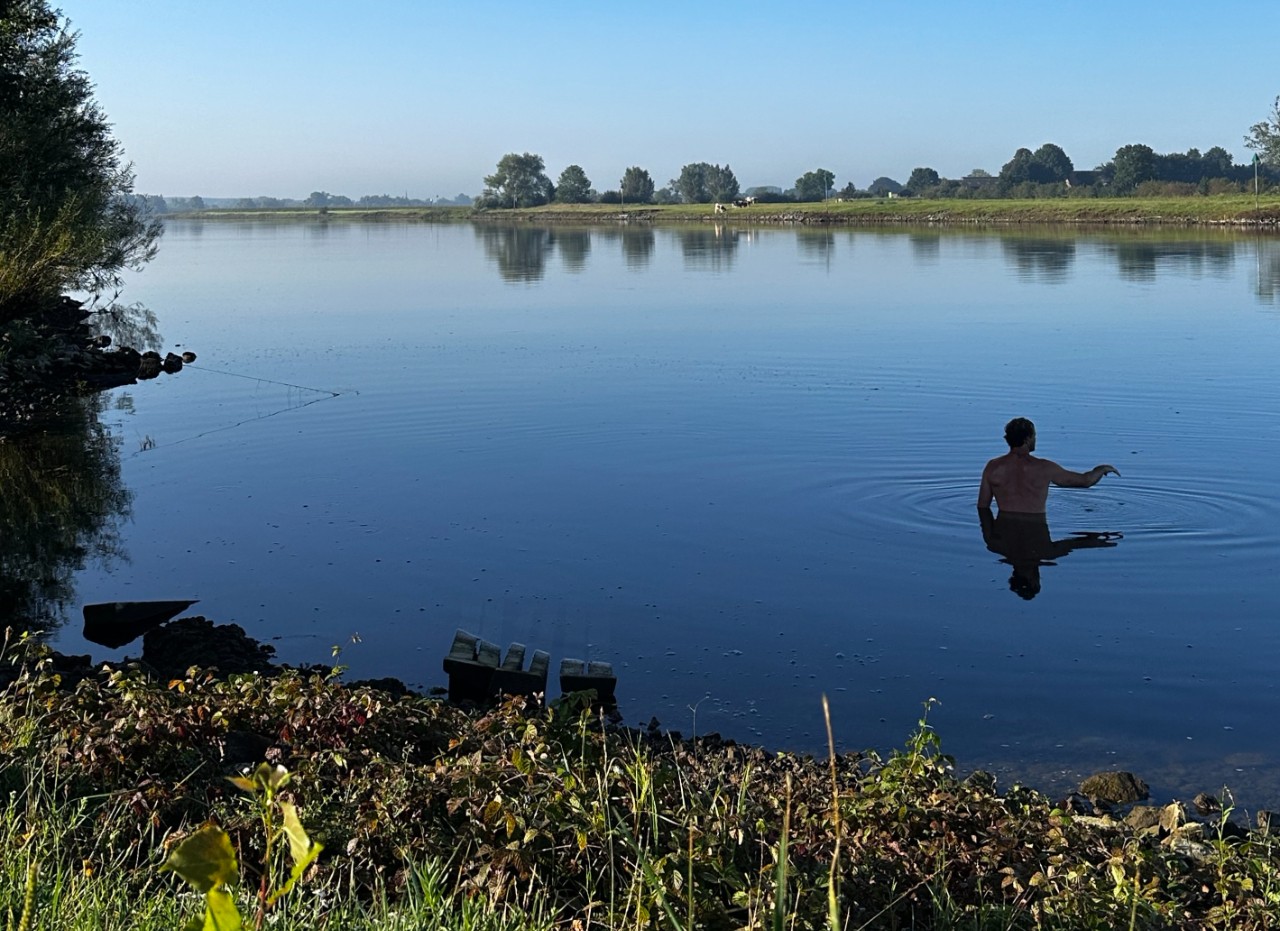
Early morning swim in the IJssel, The Netherlands, Summer 2025
Below you find my Goodreads review:
 Is a River Alive? by Robert Macfarlane
My rating: 4 of 5 stars
A lyrical, urgent exploration of rivers as living entities.
In Is the River Alive?, Robert Macfarlane embarks on three deeply immersive journeys — through Ecuador’s cloud forest, the poisoned deltas of Chennai, and the ancestral waters of Canada’s Nitassinan — to ask a profound and timely question: what if rivers are not resources, but beings?
As in Underland, Macfarlane blends ecology, mythology, deep time, and cultural memory into a narrative that flows like its subject. The book weaves voices from many disciplines and communities — Indigenous elders, poets, scientists, mycologists, musicians — forming an ecology of thought that mirrors the interconnectedness of river systems themselves.
The writing is luminous and layered. From declarations of river rights to the fungal underworld of cloud forests, from colonial legacies to industrial sacrifice zones, Macfarlane examines how rivers have been both worshipped and wounded. Especially powerful is his exploration of “ghost rivers” — once-flowing waters now buried beneath asphalt, their voices reduced to whispers in manholes.
If Underland descended into the deep past and hidden futures, Is the River Alive? moves laterally and fluidly — across borders, bodies, and metaphors. It reminds us that a river’s flow is never singular: it meanders, eddies, splits, and sometimes, miraculously, converges.
Highly recommended for readers of nature writing, environmental philosophy, and lyrical nonfiction. This is Macfarlane at his most urgent — and most poetic.
View all my reviews