Beyond the Bully: Why Screen Time is a Battle for Your Child's Brain
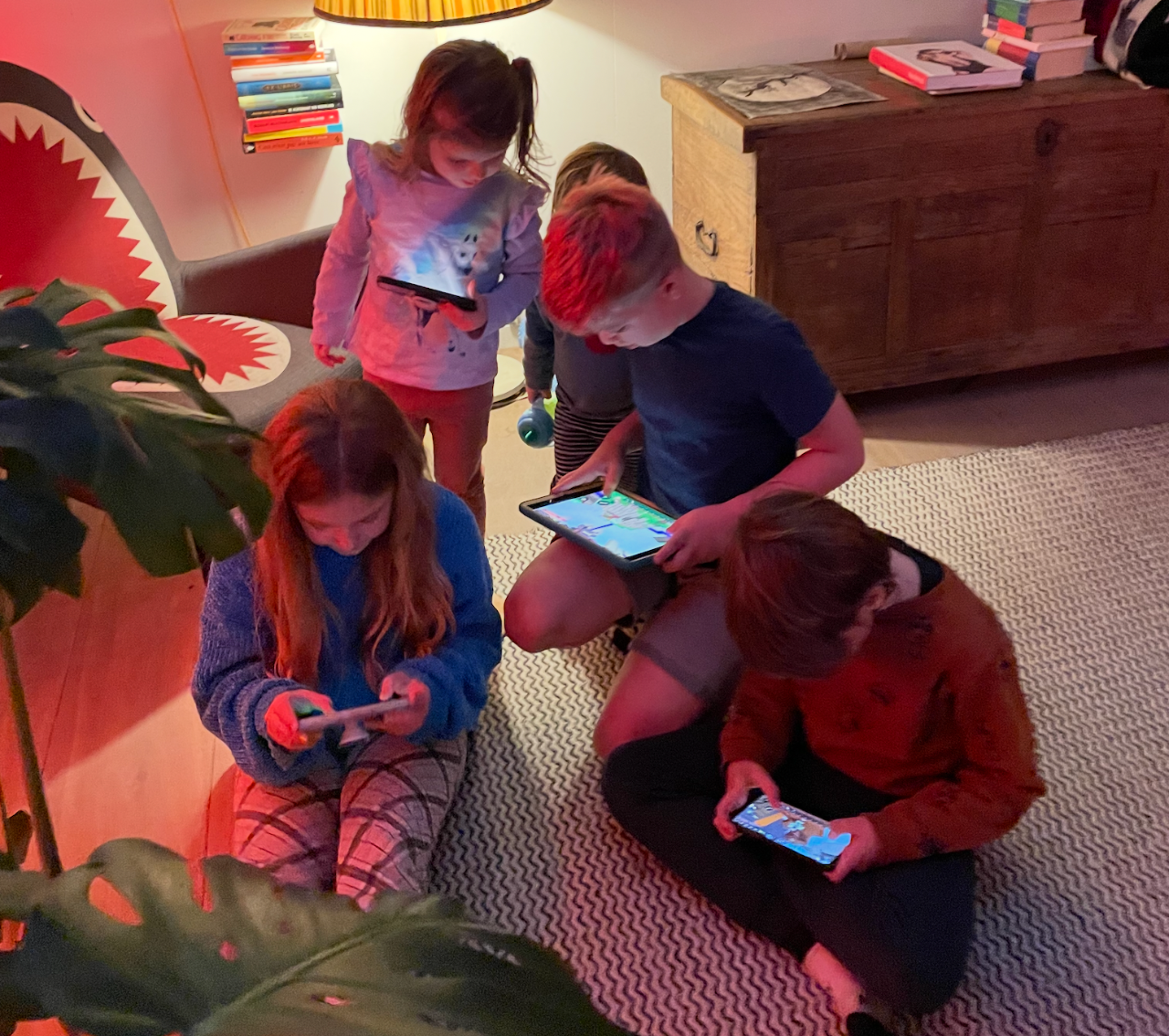
It's the battle cry of a generation. As parents, we walk into the room, see our kids "zombified" by a screen, and feel an immediate surge of frustration. We set a limit, we enforce it, and then; the explosion. We become the Bully, the vibe is killed, and the afternoon is a wash.
But if we want to stop the fighting, we have to understand that this isn't just "bad behavior." It's biology working against us.
“I’m in the middle of something!”
The "Brainrot" Reality: Design vs. Development
When we talk about #brainrot, we're talking about Persuasive Design. Apps like TikTok, YouTube Shorts, and games like Roblox or Fortnite are engineered to do one thing: keep kids from stopping. They do it in a few specific ways.
Variable Reward Schedules.
Like a slot machine, these platforms deliver a hit of novelty or reward at unpredictable intervals. Behavioral research consistently shows that unpredictable rewards drive more persistent engagement than predictable ones, it's why we keep scrolling even when we're not enjoying ourselves.
The Infinite Scroll.
Traditional media had built-in stopping cues: the end of a chapter, a commercial break, the credits rolling. These platforms deliberately remove them. There is no natural moment for the brain to pause and ask, "Should I keep going?"
The Transition Problem.
Here's the part that matters most for parents: an 11-year-old's capacity for impulse control and planning is still actively developing. Neuroscientists generally agree that the prefrontal cortex, the region most associated with braking behavior and thinking ahead, continues maturing well into the mid-twenties. When kids are deep in a high-engagement game or video, they're not ignoring you. They are genuinely struggling to shift gears. The "one more minute" isn't defiance; it's a real cognitive gap.
When we abruptly pull the plug, we don't just stop a game. We trigger a jarring transition that the developing brain isn't equipped to handle gracefully. That's where the meltdown comes from and that's where a different approach changes everything.

The "10 to 25" Shift: From Enforcer to Mentor
In his book 10 to 25, developmental psychologist David Yeager makes a compelling case that adolescents and pre-teens are acutely sensitive to signals of status and respect. How we frame a rule matters as much as the rule itself.
The Enforcer Mindset: "I am the boss. Stop now because I said so." This triggers what Yeager calls a "threat response." The kid feels disrespected, loses a sense of autonomy, and fights back, not to be difficult, but to restore a sense of dignity.
The Mentor Mindset: "I have high standards for your health and focus, and I'm going to give you the tools to meet them yourself." This is the shift I wrote about in Stop Telling, Start Trusting, moving away from constant instructions and toward building our kids' capacity to self-regulate. The goal isn't to control them. It's to make control feel unnecessary over time.
My Solution: The "Joker" System
To put this into practice, I kept the 1.5-hour daily limit but with a twist that hands the agency back to Eli.
The Strategy:
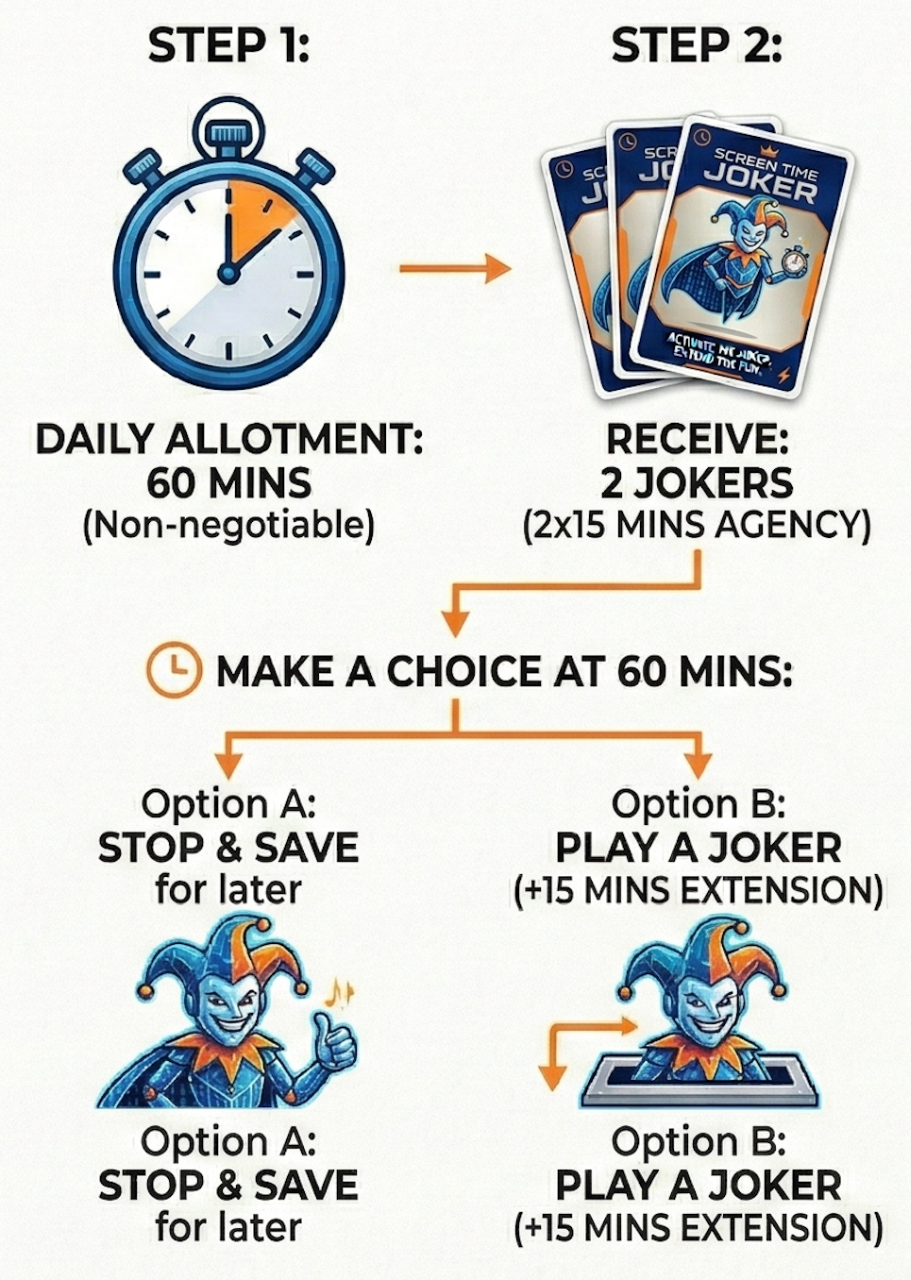
- The Base Hour. He gets 60 minutes of standard screen time.
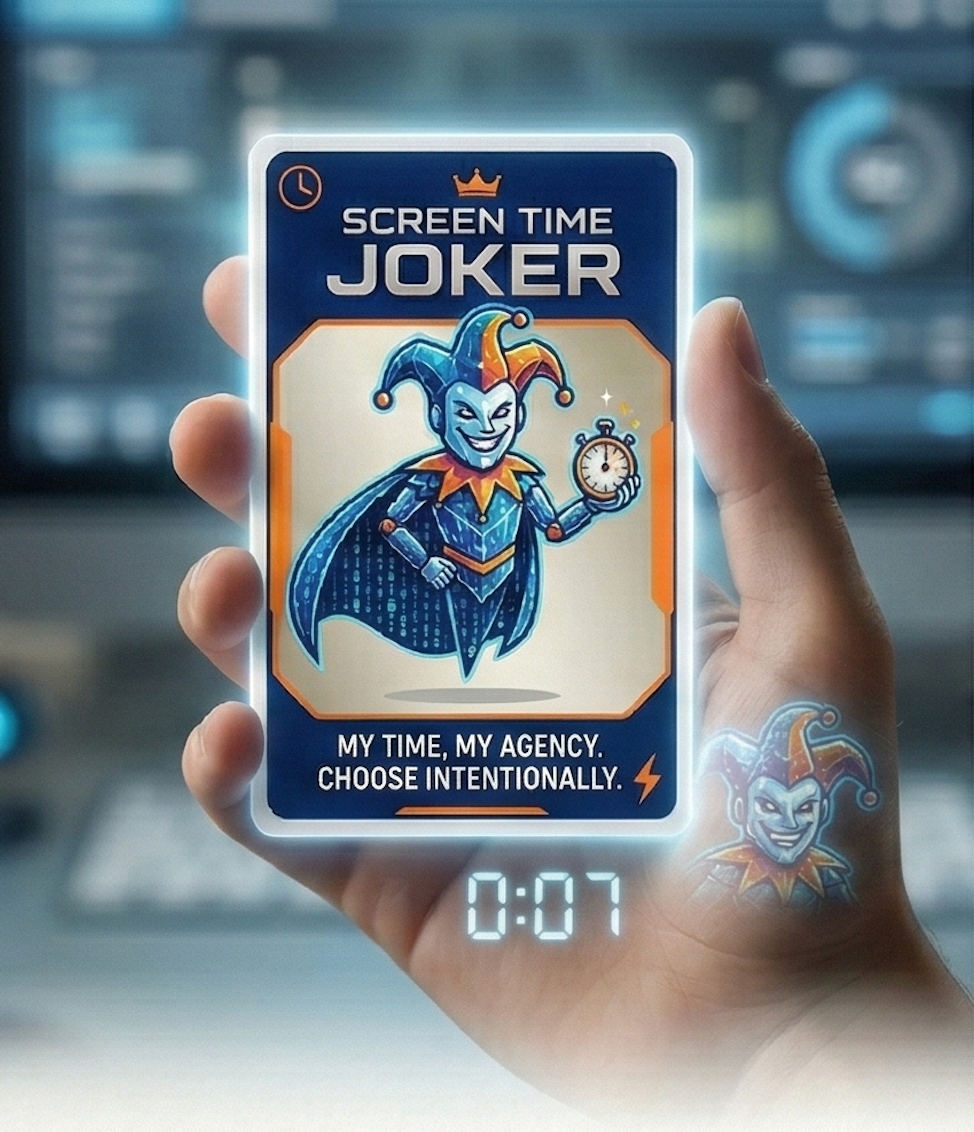
- The Two Jokers. He holds two virtual Joker cards (could be physical as well), each worth 15 minutes of extra time.
- The Conscious Choice. When the 60-minute alert goes off, I don't bark an order. The system simply signals the end of the "free" window. He now has a choice:
- Stop now and save his Jokers (banking them builds status as someone who self-regulates).
- Play a Joker to get 15 more minutes to finish his match or video, on his terms.
Why Agency Defeats "Brainrot"
The extra time isn't the point. The pause is the point.
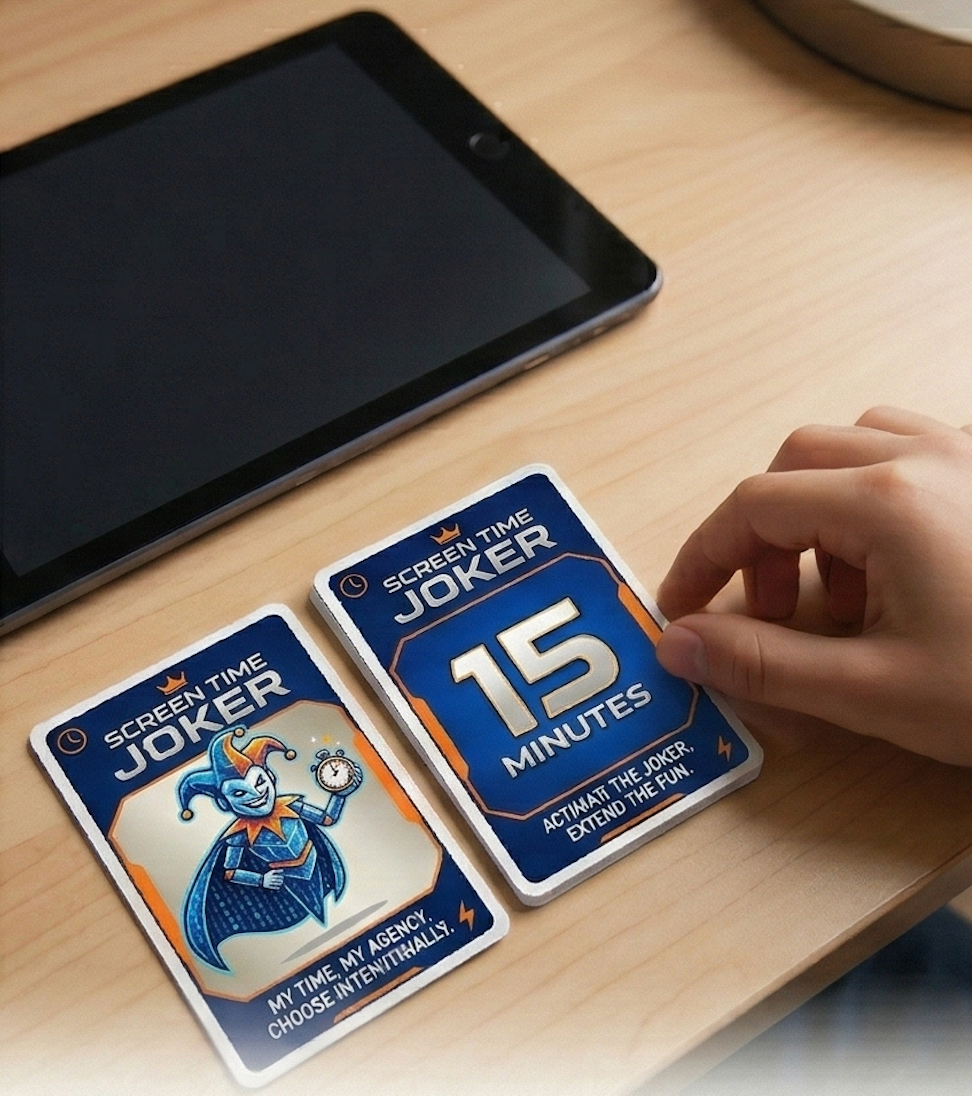
By making him physically play a card to extend his session, we create a small but meaningful interruption. He has to stop, think, and make a decision. That moment of deliberate choice is exactly what persuasive design is engineered to prevent. We're essentially forcing a stopping cue back into the experience.
He becomes the manager.
He's no longer a passive recipient of either an algorithm's choices or a parent's commands. He's making a transaction with his own time.
The boundary is pre-accepted.
Because he chose to spend a Joker, he's already mentally prepared for what comes next. The end isn't a surprise, it's the natural conclusion of a decision he made. The "Bully" disappears because the power was his all along.
The vibe stays intact.
The arguments have gone. We've traded an afternoon-long standoff for a 15-minute intentional transition.
What Two Weeks Looks Like
We've been running the Joker system for two weeks now.
The arguments have stopped. He hasn't once pushed back against the signal.
Last week, Eli called me from his mom's house. Before he told me he wanted to play a Joker, before screens came up at all, he asks me how my day was going.
That's the prefrontal cortex coming online. That's a kid who has started to notice that other people exist when he's not in front of a screen. No lecture did that. A small system that gave him back his own agency did.
The Takeaway
We can't redesign the apps. We can't undo the algorithms. But we can change the structure around them, and we can change how we show up as parents inside that structure.
Stop being the Enforcer of the hard stop. Start being the Mentor who hands them the tools to stop themselves.
It turns out, the best way to stay in control of the vibe is to hand the control over to them. One Joker at a time.