Stop Telling, Start Trusting
Why Constant Instructions Might Be Stifling Your Child’s Growth
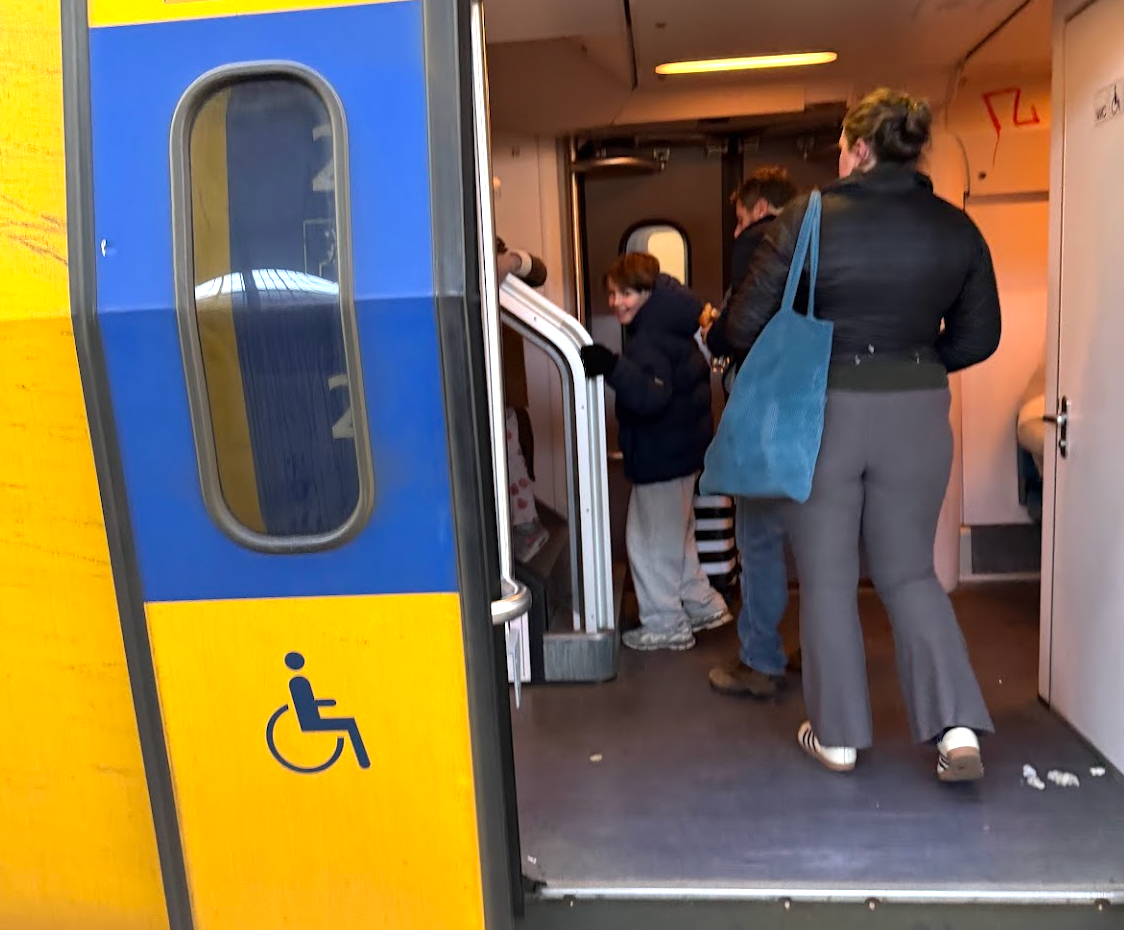
He was 11 years old. Backpack on, train ticket in hand, excited smile on his face. He said goodbye, warmly, confidently and walked through the barrier without looking back.
I stood on the platform and watched him go. Inside, I was a little nervous. Outside, I tried not to show it.
That moment, Eli taking the train to his grandmother’s house alone for the first time, wasn’t an accident. It didn’t happen because I sat him down and told him he needed to be more independent. It happened because, over years of small decisions, I had gradually stopped telling him so much.
This post is about those small decisions. And why they compound into something bigger than you expect.
The Instruction Flood
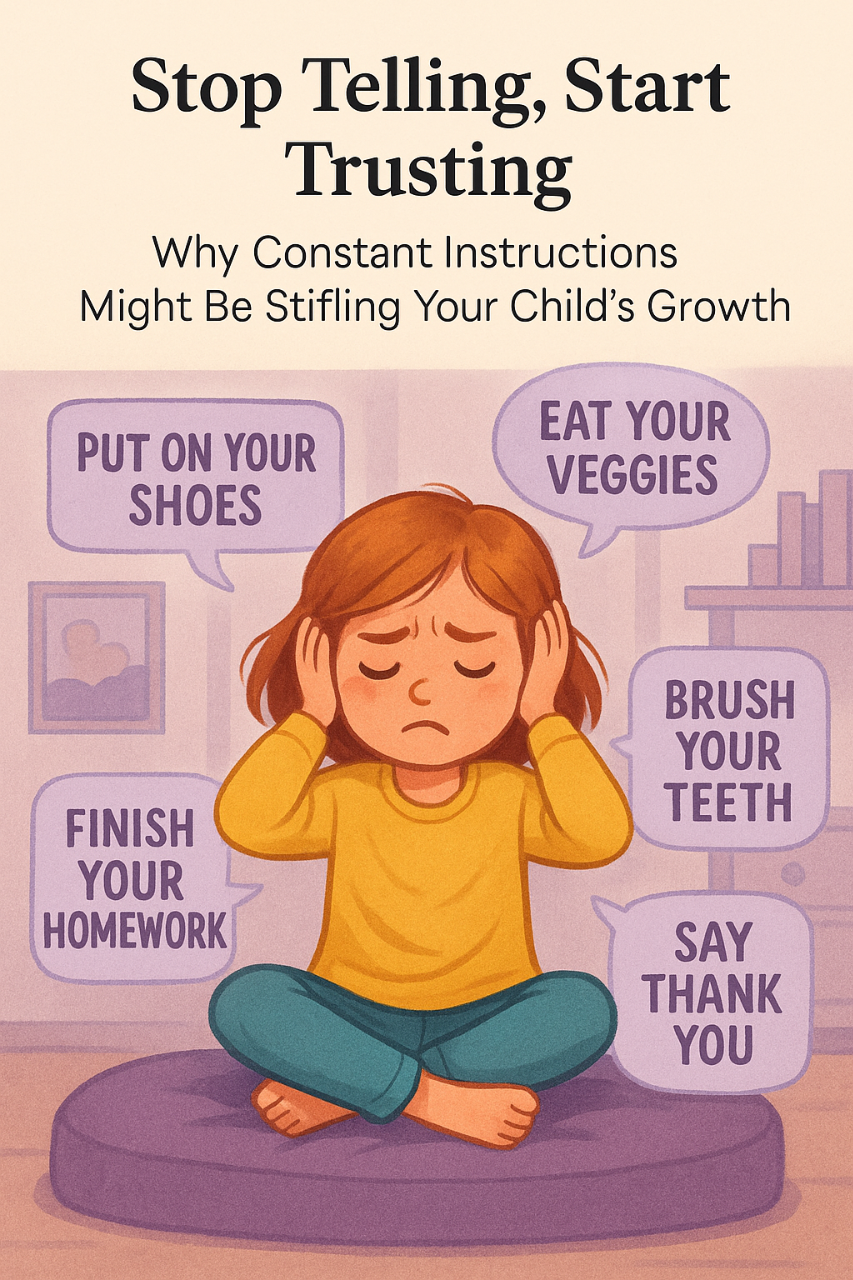
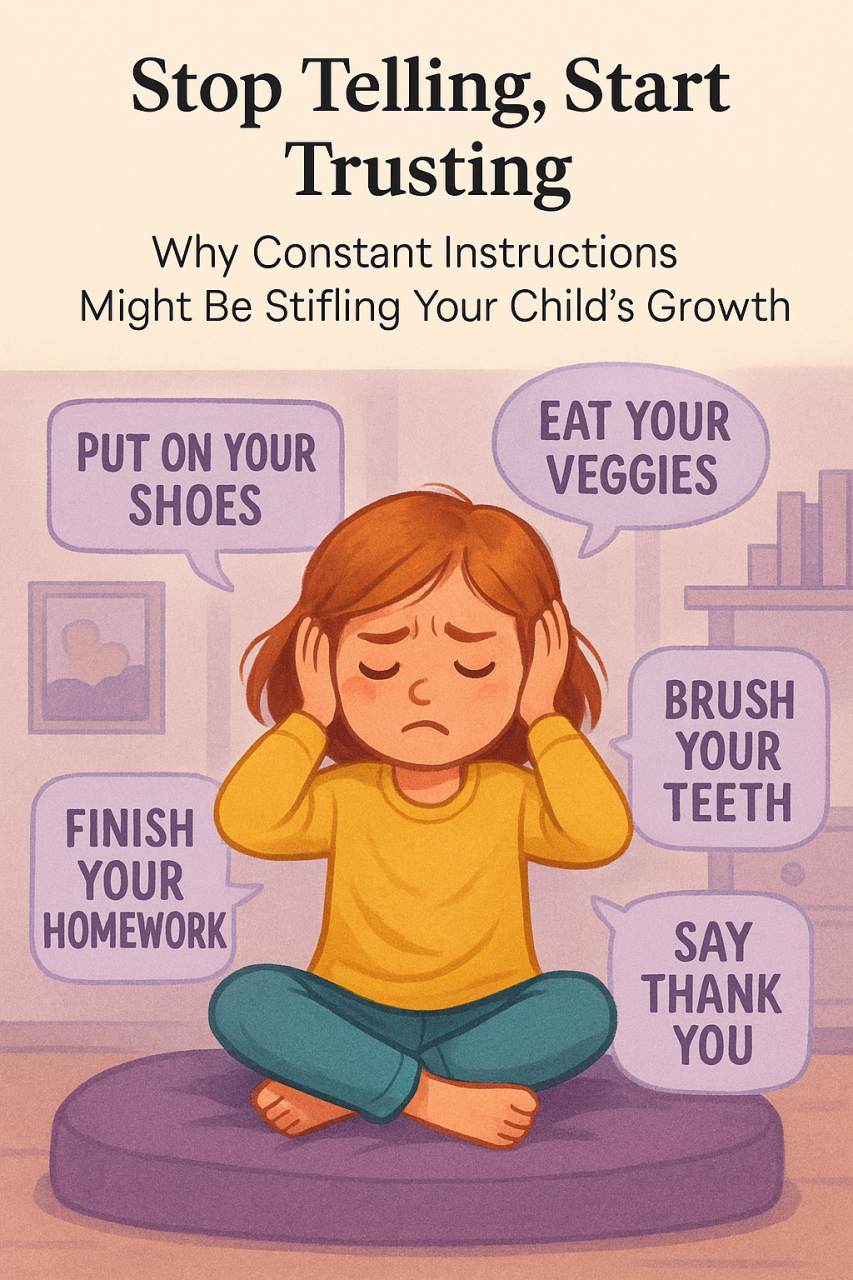
From the moment children wake up to the time they go to bed, their day is filled with a relentless stream of instructions.
“Put on your shoes.”
“Eat your veggies.”
“Say thank you.”
Research suggests young children can receive somewhere between 6 and 10 instructions in a single 30-second window. Multiply that across a day and you’ve issued hundreds of directives,most of them well-intentioned, many of them unnecessary.
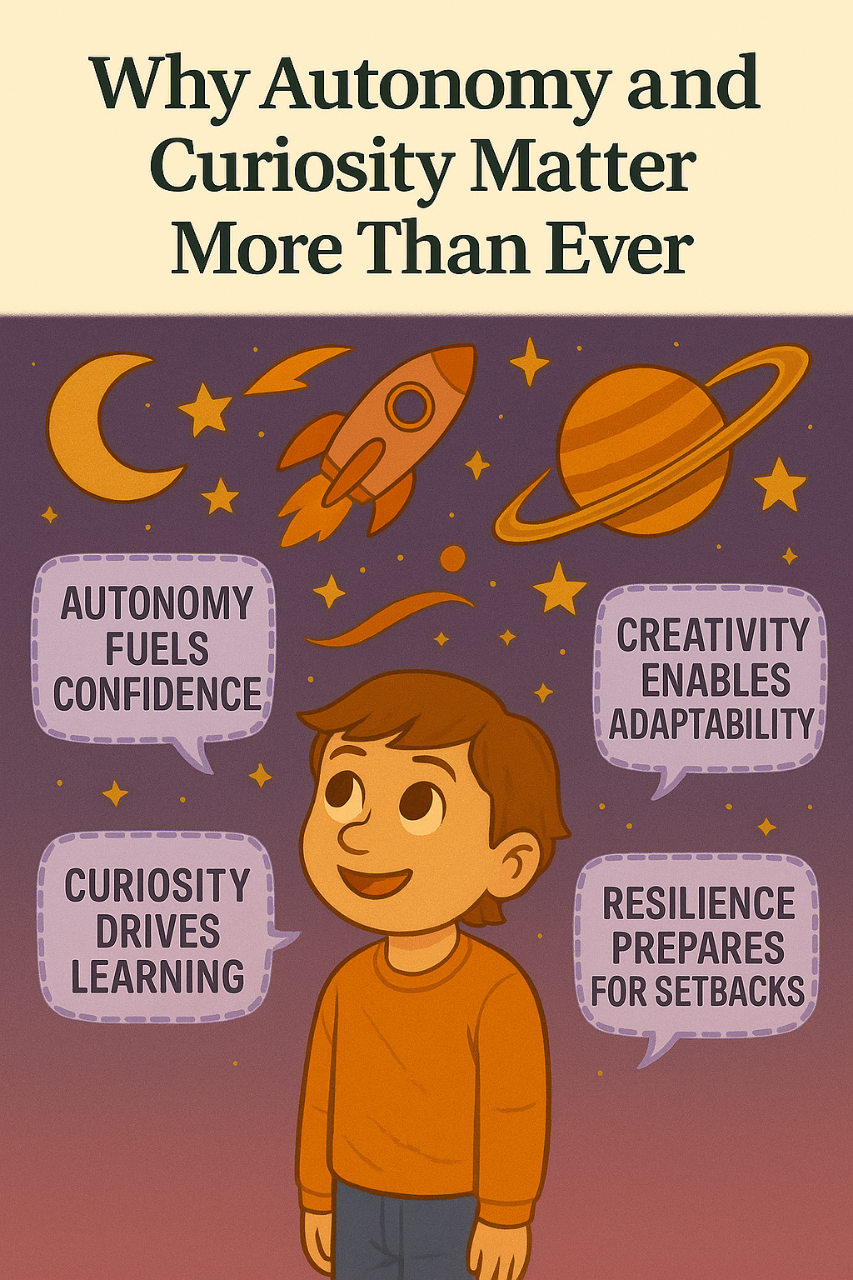
We want our kids to grow into curious, independent, resilient humans. But we often parent them like they need constant input to function. The irony is that the very qualities we value - initiative, problem-solving, confidence - are quietly eroded every time we step in before they get the chance to figure something out themselves.
What Over-Guidance Actually Does
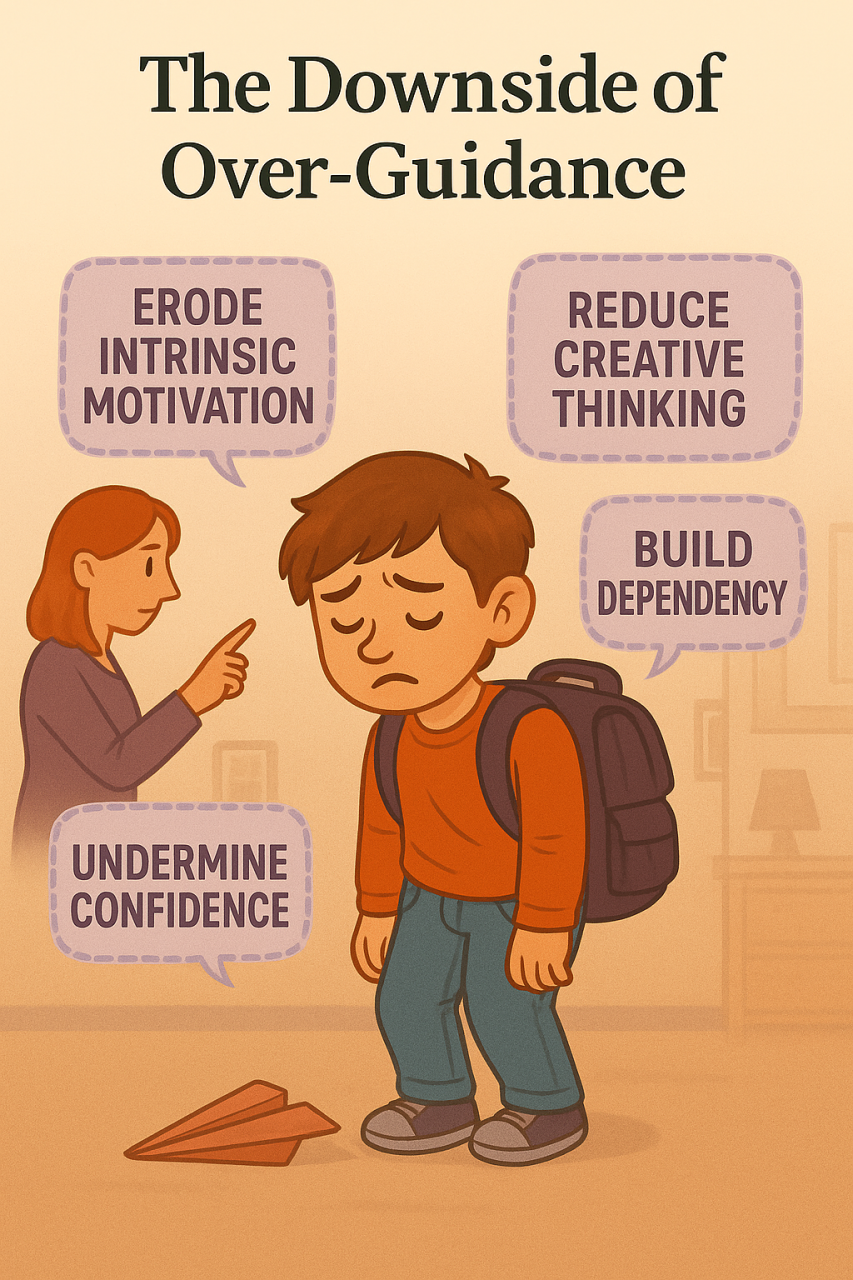
The intention is almost always good. We want to protect, support, prepare. But too many instructions, delivered too consistently, teach children something we never meant to teach:
Wait for someone to tell you what to do next.
Instead of asking “What if?”, they learn to ask “What now?” Instead of trusting their own judgment, they outsource it to us. And gradually, without either side noticing, dependence becomes the default.
This isn’t a parenting failure. It’s an easy trap. Structure feels safe. Guidance feels responsible. But there’s a difference between a guardrail and a leash.
Autonomy Isn’t a Reward — It’s a Muscle
Eli rides his bike 25 minutes to soccer practice a few times a week. He cleans the kitchen after dinner, and genuinely finishes when it’s done, not when he thinks I’m watching. He’s walked his 7-year-old sister to school. He goes into shops alone, speaks to strangers, asks for help when he needs it.
None of this was a single decision I made. It was the result of dozens of smaller ones. Letting him choose. Letting him fail. Stepping aside instead of stepping in.
Educational philosophies like Montessori and Reggio Emilia have understood this for decades: when children are given meaningful choices within a structured environment, they grow into self-directed, engaged people. Not because they were taught independence, but because they were given room to practice it.
Autonomy isn’t something you hand over all at once. It’s a muscle. And like any muscle, it grows through use, not instruction.
Tiny Shifts, Massive Impact
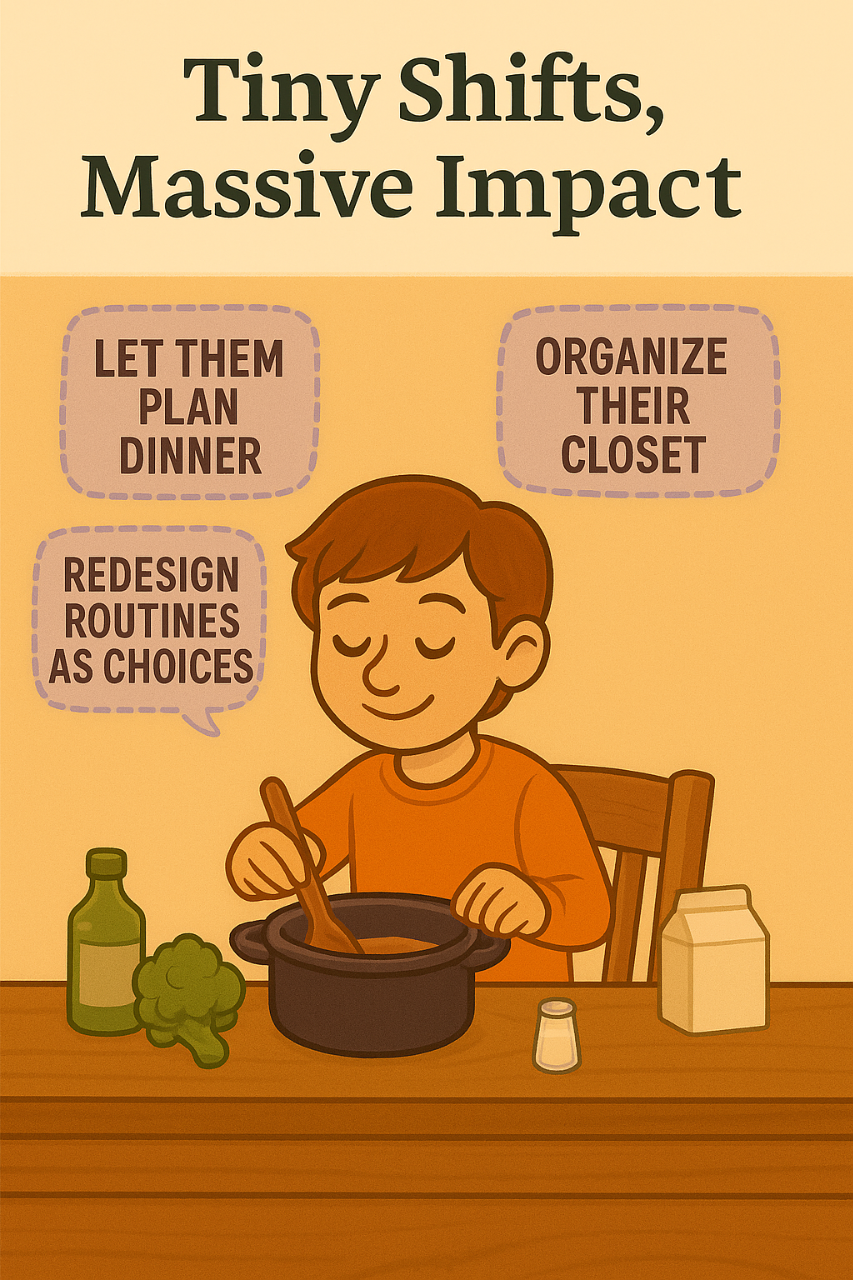
You don’t need to redesign your parenting to start. Here are three things we actually do at home that have made a real difference.
- Let them plan dinner. Buy ingredients for a few different meals and let your kid decide the order across the week. It’s a small invitation to take ownership and they take it seriously..
- Organize their closet with purpose. If kids can see and reach their clothes, they can choose what to wear. Even choosing mismatched socks is a decision they made. That matters.
- Redesign routines as choices. Bedtime is non-negotiable. But how they get there can be up to them, shower before or after reading, for example. The boundary holds; the agency lives inside it.
These aren’t revolutionary. But they’re real, and they add up. Children learn that they’re not just passengers. They’re pilots.
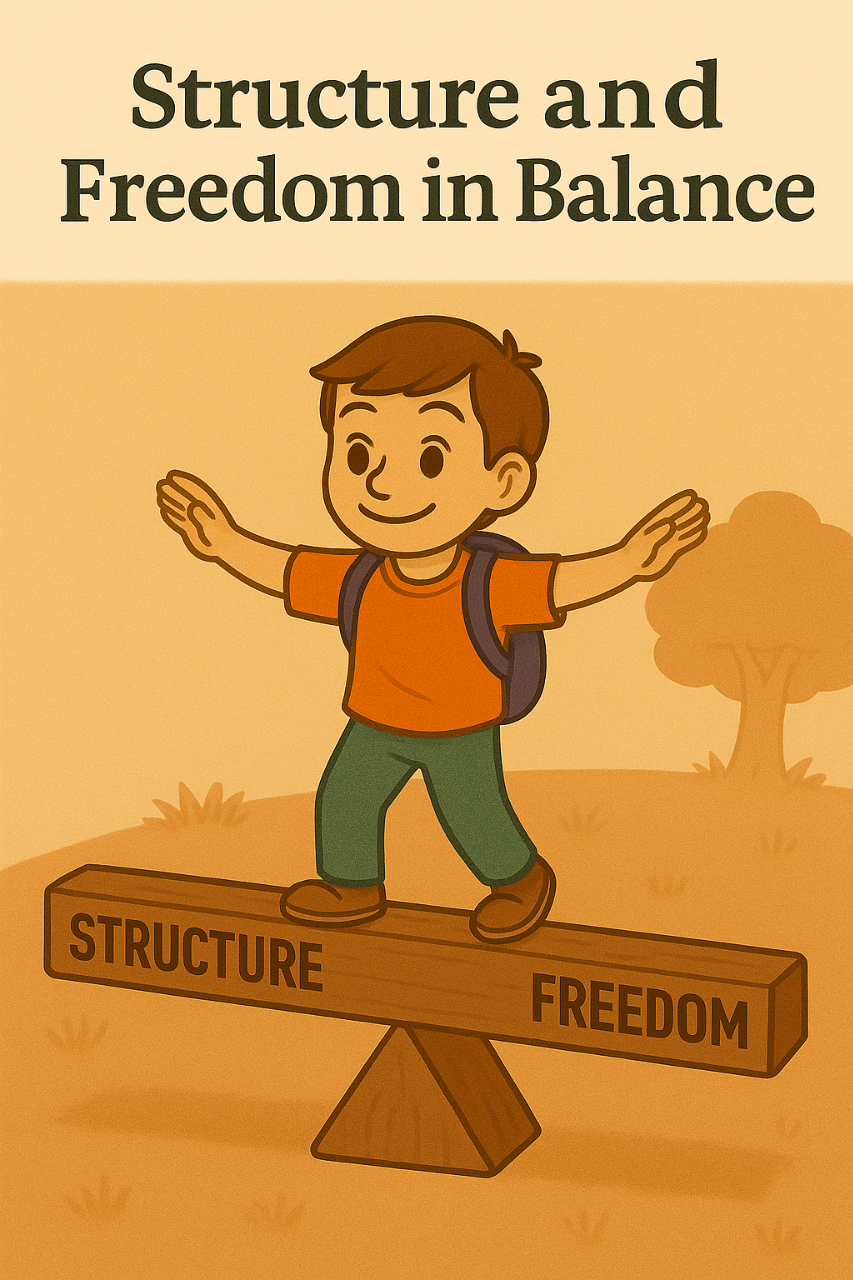
Structure + Freedom = Growth
Some rules are essential. Kids need boundaries; they create safety, predictability, clarity. But within those boundaries lies the opportunity to choose, to try, to fail, to adapt.
Think of it as guided freedom. You don’t step back entirely. You step aside just enough to let them walk.
The nervousness on that train platform? That was mine to manage, not his. He wasn’t anxious. He was excited. He’d been practicing for that moment for years, in kitchens, on bikes, in shops, on walks to school with his little sister.
When the train pulled away, he didn’t look back. Not because he didn’t care. Because he knew he had it.
That’s what trust, practiced consistently over time, actually looks like.
One day, they won’t be asking, “Can I?”
They’ll already be gone, backpack on, ticket in hand, not looking back.
And you’ll be standing on the platform, trying not to smile too wide.