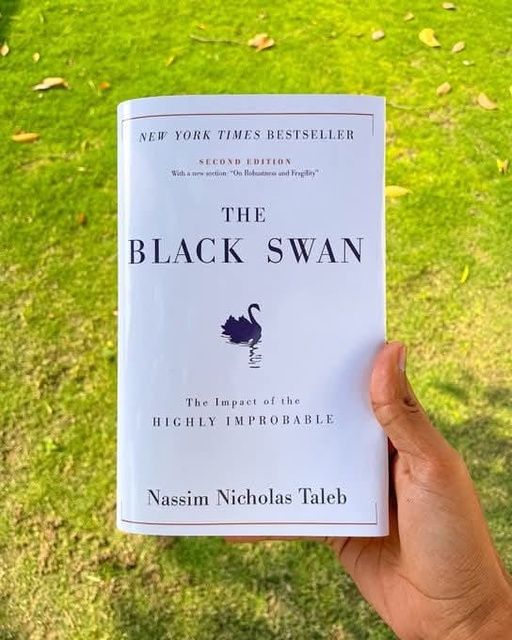
Book report - The Black Swan and the Art of Living With the Unpredictable
Taleb argues that the events that shape our lives most; love, loss, opportunity, timing, catastrophe, breakthrough, are the ones we never see coming. We pretend we’re steering a predictable ship, but most of the time we’re surfing a chaotic wave and hoping not to fall off.
It made me look at my own life with a fresh lens.
Almost everything that truly mattered arrived unannounced: Silicon Valley during the dot-com storm, founding Mobypicture, the sideways jump into Kinder, living on a houseboat, meeting my baby mothers, the kids… None of these were strategic moves on a meticulously planned timeline. They were Black Swans: rare events that hit with disproportionate impact.
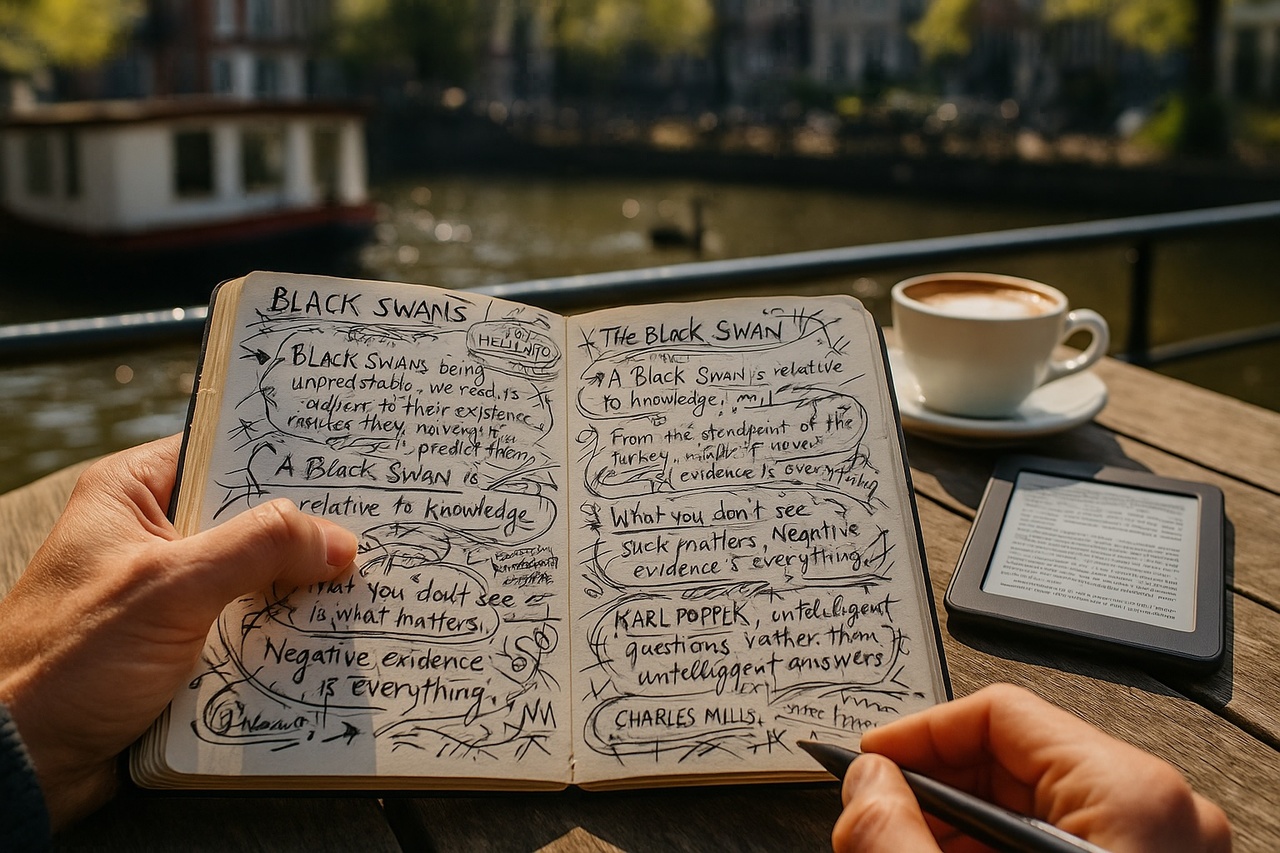
Taleb puts it bluntly: “Black Swans are unpredictable; we need to adjust to their existence rather than naïvely try to predict them.”
That sounds obvious, but it’s a quiet revolution in how you view both risk and opportunity.
The Power of What You Don’t See
One idea stood out above all: negative evidence.
We’re obsessed with the visible. We stare at data, patterns, dashboards, history. But Taleb reminds us that the world is shaped far more by what we don’t see; the silent data, the failures that never show up in case studies, the opportunities you didn’t know you missed, the disasters that almost happened.
Your life is shaped as much by invisible events as visible ones.
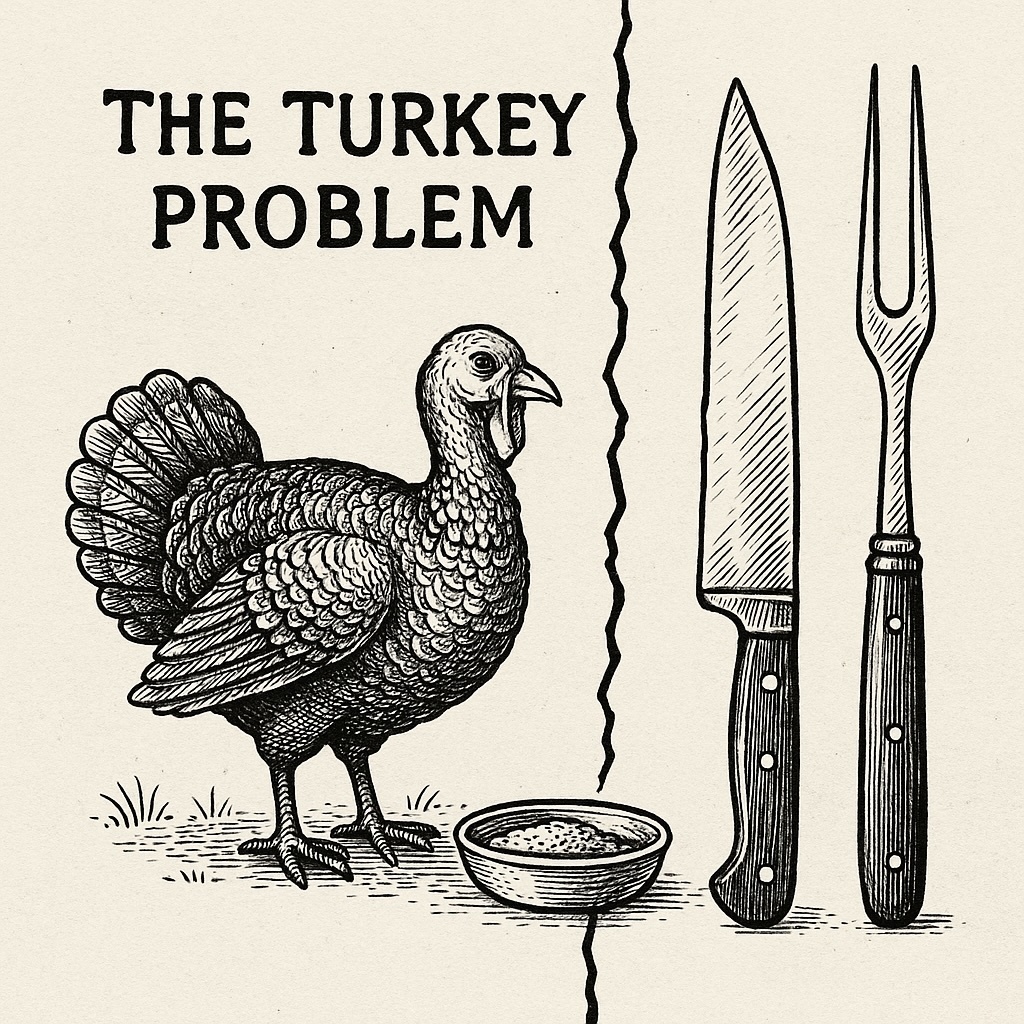
His “turkey problem” illustrates this perfectly:
A turkey is fed for 1 000 days and concludes that humans love turkeys — until day 1 001, when it suddenly learns about Thanksgiving.
We are all the turkey more often than we’d like to admit.
History Misleads More Than It Teaches
Another highlight: “A Black Swan is relative to knowledge.”
It’s not the event that’s surprising, it’s our limited perspective.
We think in straight lines, but the world curves. We expect continuity, but reality jumps. And yet we keep treating the past as a crystal ball.
Taleb’s point is simple:
History comforts us, but it rarely prepares us.
As someone who’s built companies, I can confirm: NOTHING big ever happened because it was in the plan. It happened because of timing, curiosity, improvisation, and the willingness to ride uncertainty rather than fear it. It happened by paying attention to opportunity and opening the door for serendipity.
Intelligent Questions Over Easy Answers
One of my favourite highlights came from Taleb quoting Karl Popper:
“I prefer books filled with intelligent questions rather than unintelligent answers.”
That line stayed with me, maybe because it sums up how I think about building products, teams, and even raising kids. Certainty is cheap. Curiosity and doubt age better.
What I’m Taking Forward
After finishing the book, I found myself jotting down a few principles I want to keep close:
-
Plan lightly. Overplanning is delusion.
-
Put yourself in the path of positive surprises.
-
Limit exposure to negative ones.
-
Don’t trust patterns too much, especially if they look neat.
-
Focus on what isn’t seen. That’s usually where the truth hides.
-
Aim for antifragility: systems, routines, and mindsets that grow stronger from shocks.
None of these are new to me. But The Black Swan turned them into a coherent worldview, almost an operating system.
Closing Thoughts
In the end, The Black Swan didn’t shock me. It clarified me.
It put words to the way I’ve lived my entire adult life: improvise, stay curious, don’t fear the unknown, and don’t pretend the world is more predictable than it is.
If anything, the book was a gentle reminder that the most meaningful things can’t be scheduled or forecasted. They arrive unexpectedly, sometimes painfully, often beautifully, and they reroute your story.
And that’s exactly what keeps life interesting.